
Introduction
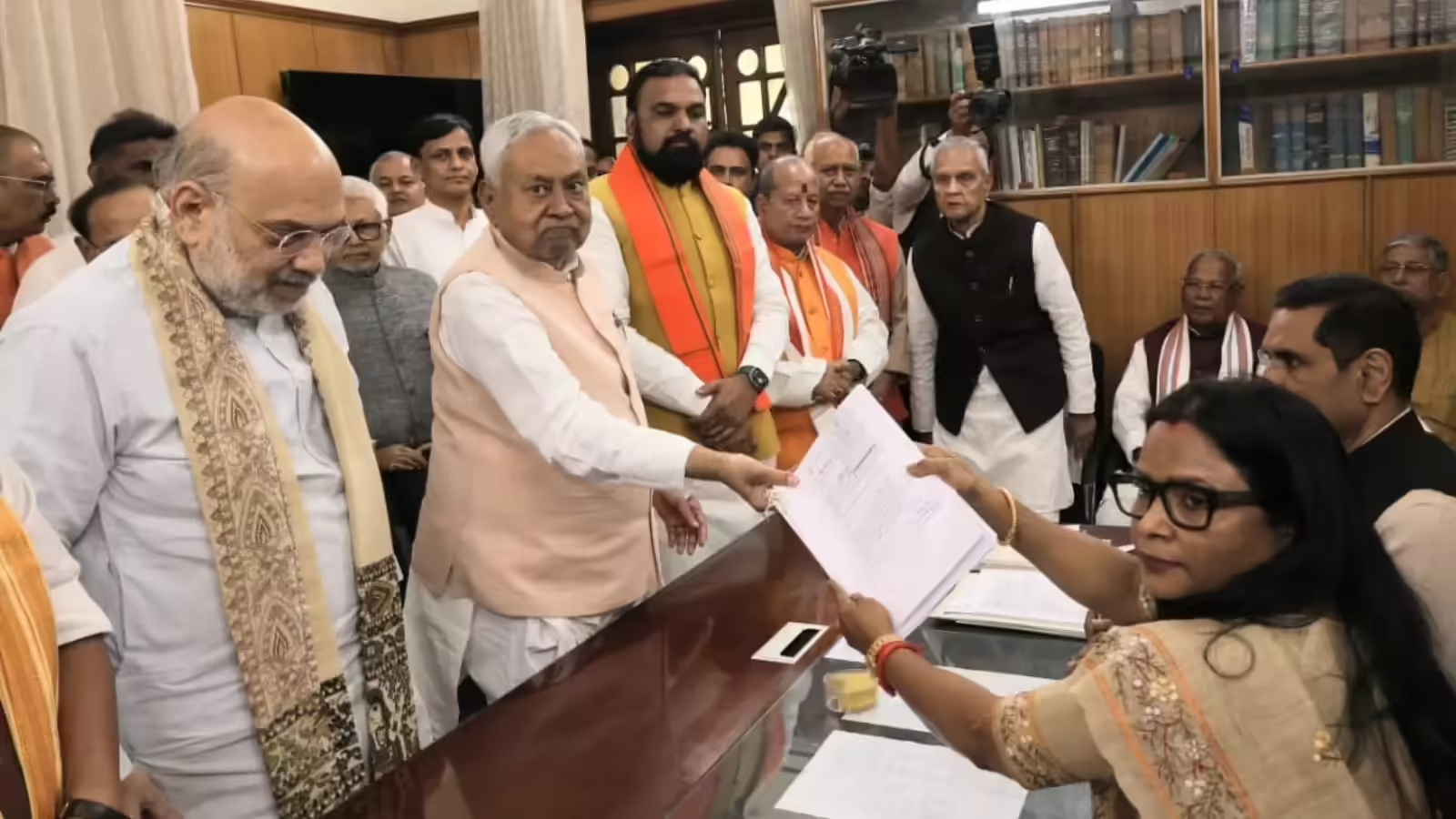
In a major political development, Bihar’s long-serving Chief Minister Nitish Kumar is expected to step down from his position and move to the Rajya Sabha, the upper house of India’s Parliament. The decision marks a significant shift in Bihar politics and could lead to a major leadership change in the state.
Nitish Kumar’s Political Legacy
Nitish Kumar has been one of the most influential political leaders in Bihar for nearly two decades. He first became Chief Minister in 2005 and has served multiple terms since then. Over the years, he built a reputation for focusing on governance reforms, development, and social welfare.
Because of his administrative style and focus on governance, Kumar earned the nickname “Sushasan Babu,” which means “Mr. Good Governance.” His government introduced several important initiatives aimed at improving the state’s social and economic conditions.
Major Reforms During His Tenure
During his time in office, Nitish Kumar launched several programs to improve Bihar’s development. Some of the key areas where his government focused include:
- Improving law and order in the state
- Promoting girls’ education through scholarship schemes
- Expanding road and infrastructure development
- Supporting women’s empowerment through reservation policies
These initiatives helped change Bihar’s development narrative and brought national attention to his governance model.
Move to National Politics
According to political reports, Nitish Kumar is preparing to enter the Rajya Sabha and shift his role from state politics to the national level. By becoming a member of Parliament, he may play a larger role in national political discussions and policymaking.
This move could also strengthen his party’s influence at the central level and create new political opportunities for the ruling alliance.
Possible Leadership Change in Bihar
Nitish Kumar’s departure from the Chief Minister’s position could open the door for a new leader to take charge of the state government. Political analysts believe that leaders from the Bharatiya Janata Party or his own party, the Janata Dal (United), may become the next Chief Minister of Bihar.
The leadership transition is expected to be closely watched because it could reshape the political dynamics in the state ahead of future elections.
Reactions From Party Workers and Public
Nitish Kumar’s decision has generated mixed reactions among political supporters and party workers. Some believe his experience will be valuable in national politics, while others feel that Bihar may lose an experienced administrator.
Political observers say that his move could mark the end of a long era in Bihar’s state leadership.
Conclusion
The decision of Nitish Kumar to step down as Bihar’s Chief Minister and move to the Rajya Sabha represents an important turning point in Indian politics. After years of shaping Bihar’s governance and development policies, his transition to Parliament could open a new chapter in his political career while also reshaping the leadership structure of the state.
About the Author