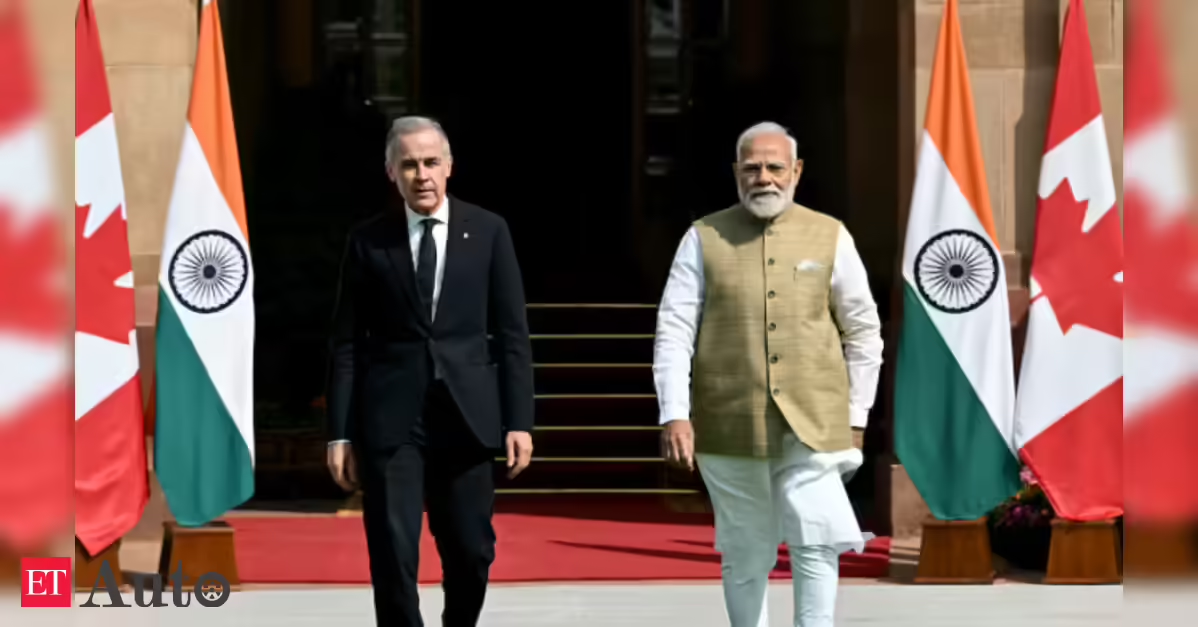
The Canadian PM visit India 2026 marked a historic moment as Prime Minister Justin Trudeau arrived in New Delhi to strengthen bilateral ties and sign key agreements.
The deal, finalized in [March 2026], ensures a steady supply of uranium for India’s civilian nuclear power plants, helping the country meet its increasing energy demands while promoting clean energy. Canadian officials highlighted that this agreement reinforces the long-standing strategic partnership between the two nations.
Key Highlights:
- 10-year supply pact: Secures uranium deliveries for India’s nuclear reactors.
- Energy security: Supports India’s commitment to clean and sustainable energy.
- Strengthening ties: Deepens India-Canada strategic and trade relations.
- Future cooperation: Opens doors for joint nuclear research and technology sharing.
Experts say this agreement is crucial for India’s nuclear expansion plans and demonstrates growing trust and collaboration between the two countries.
About the Uranium Supply:
The uranium will be sourced from Canadian mines, and deliveries will follow international nuclear safety and regulatory standards. This partnership also aligns with global non-proliferation norms.
West Asian conflict
The two leaders discussed the escalation of the conflict in West Asia, although they didn’t put out any joint understanding on the issue.
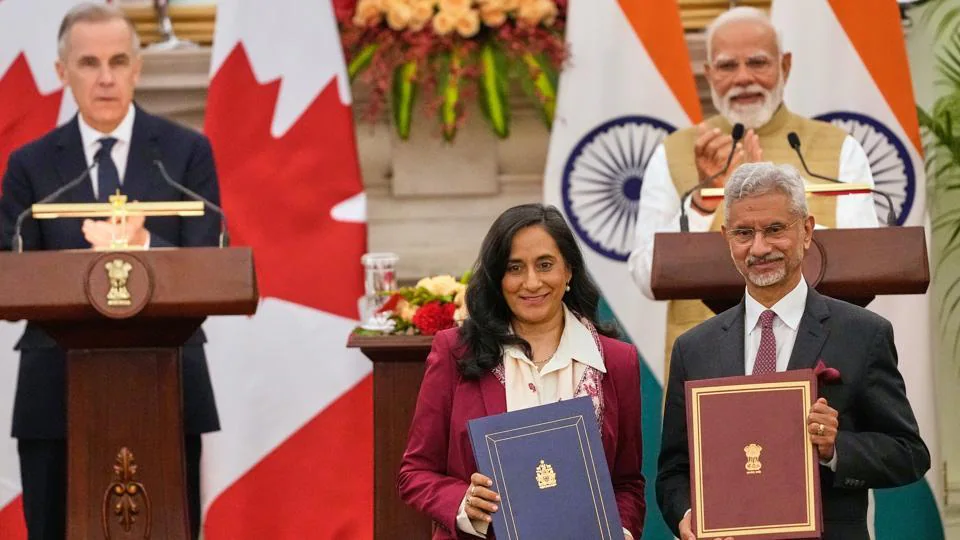
“India has always called for peace and stability to be maintained,” said Mr. Modi, addressing the media after talks with Mr. Carney at Hyderabad House on Monday (March 2, 2026), and referring specifically to the situation in West Asia as one of “deep concern” for India. He called for “diplomacy and dialogue” to resolve the situation. On Friday (February 27, 2026), Mr. Carney, who spent the weekend in Mumbai, issued a statement supporting the U.S.’s strikes on Iran.
Mr. Carney is the first Canadian Prime Minister to make a bilateral visit to India since his predecessor Justin Trudeau visited India in 2018, and then in 2023 to attend the G-20 summit. Both visits were fraught with tensions, especially over New Delhi’s concerns that the Canadian government is harbouring violent anti-India groups, including Khalistani leaders, and Ottawa’s accusations that Indian government officials are involved in “transnational repression” of these groups.
Canada PM Mark Carney arrives in Mumbai on four-day India visit
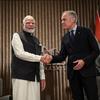
In a joint statement issued on Monday (March 2, 2026), India and Canada agreed to strengthen security cooperation in a number of areas, including addressing “violent extremism, terrorism, organised crime”, and called for an early meeting of the Joint Working Group on Counterterrorism, to follow recent talks between the National Security Advisers.
“Prime Minister Carney also underscored that Canada will continue to take measures to combat transnational repression,” a statement issued by Mr. Carney’s office said separately.
Nijjar case
On Monday (March 2, 2026), The Globe and Mail, a Canadian newspaper, quoted official sources saying that the Canadian Security Intelligence Services (CSIS) had “evidence” pointing to the involvement of two Indian officials at the Indian consulate in Vancouver in the Nijjar killing case, set to go to trial this year. In addition, Canadian newspaper The National Post reported a statement by the CSIS that it stands by a previous assessment that India is a “perpetrator of foreign interference and espionage against Canada”.
When asked about the reports, Ministry of External Affairs Secretary P. Kumaran said India continues to reject all such charges.
“These claims are baseless, politically motivated and unsupported by credible evidence despite repeated requests. India believes that concerns of this nature must be addressed through credible law enforcement and judicial processes, not through public or politicised narratives,” Mr. Kumaran told journalists.
More News Around World –
Iran Israel war LIVE: US, Israel strike Iran’s building selecting new supreme leader
About the Author